
Nominally, the Health Standards Committee, a selected group managed by the Minnesota Department of Education has power and control over the process and result. Statutes say they are to draft this first set of state standards from what is already successful in our districts, but the Committee is being putting forward national "model" standards written by partisan organizations like SIECUS, "Sex Education for Social Change."
Download List of Committee MembersIt's Back... But the Bureaucrats Want to Cut the Public's Jurisdiction & Input
Learn More About Draft 3 Changes
Go to Online Comment
How to Comment
Comment on the Radical Health Education Takeover
by Friday, July 18th at 4:30 PM
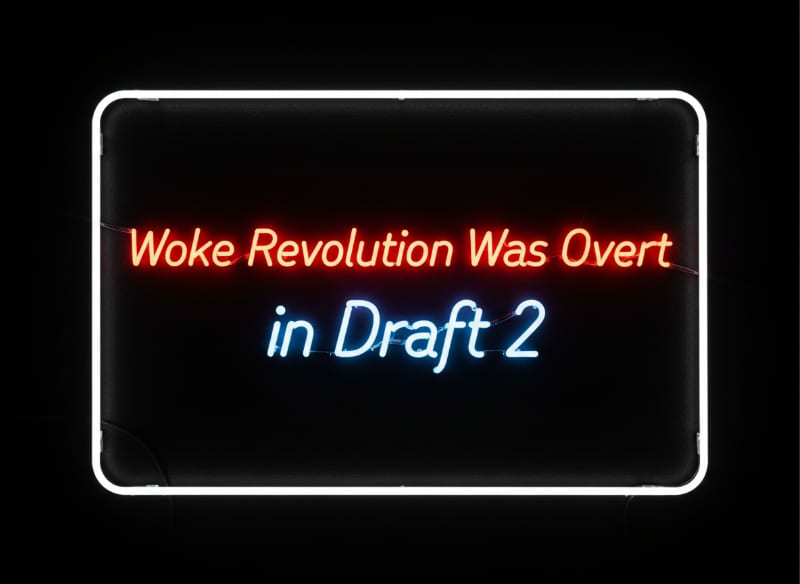
Remember Draft 2 (Summer 2025)?
Practicing the giving of consent with peers & other adults
Encourage others to add their comment:
Go to Online Comments
Use Alternative Means
Read a "Call to Action"
The online comment survey from mde is closed...you will need to use the email option below.
How to Comment
“HEALTH” STANDARDS – A STATEWIDE CALL TO ACTION—thru July 18th
Your comments by July 18th on the Waltz administration’s radically sexualized public-school K-12 “sexual health” standards will help set the stage for upcoming battles. They are tucked within broader health curriculum updates. Please do not be put off by the survey process or intentionally deep layers of “BS” in its early pages. Go to the MN Department of Education survey at this link for both the draft curriculum and survey form. If you only want to offer general comments on the draft’s sexual content, or other areas, consider skipping ahead to questions 22 and 23 to submit your comments (you can upload a document attachment). We will work with others to provide more detailed feedback on individual benchmarks and more.
Comments will become part of the official record for this radical reach for our children’s minds. Record building, like your survey input, will matter. Click here to view or download the Second Draft as a PDF.
Designed to overcome local community standards, these statewide standards impose progressive dogma so every child will be taught to find their “authentic” self through unlimited sexual exploration. Starting in pre-school, every child will be taught that boys turn into girls and that girls turn into boys; that there are unlimited genders; and that family formation and parenting are oppressive structures to be overcome in the creation of a new “social justice” society. Most disturbing is the emphasis of this indoctrination well before the age of reason when trusting young minds are the most vulnerable to distortion.
I urge you to look at the “Sexual Health” strand, pages 7-71 where the sexual requirements are presented by grade level. You may be shocked.
Examples of Sexual Health K-12 Public School Requirements
- Under “Sexual Health” Kindergarteners (Code 0.4.1.02) will learn of germ transmission and prevention. Is this “safe sex” for 5year-olds? This concept is more appropriately addressed outside of “sexual” health.
- Third graders (Code 3.4.1.02-04) learn to describe external and internal reproductive body parts in a gender-neutral way (e.g., since some “real” girls have male parts and some “real” boys have female body parts); what makes an adult trustworthy (i.e. “affirming” of this sexual dogma), and about sexual consent. The word “parent” is notably absent here and elsewhere.
- Fourth graders are taught about sexual disease and prevention with a special assurance that “HIV is not easily transmitted like other common infectious diseases” and about relationship options and getting help with these decisions. Parents are not mentioned.
- Fifth graders get more advanced safer sex training (with a special assurance that HIV is not easily caught) and are required to affirm LGBTQIA dogma about sexual identity and there being differences between sex, sexual orientation, and gender identity and expression. Parents are not mentioned.
- Seventy-eight more individual sexual benchmarks cement sexual indoctrination of progressive sexual beliefs in grades 6, 7, and 8.
- Twenty-six more benchmarks for high schools imagine a robust sexual life including birth control, dealing with unwanted pregnancies (including the right to confidential services from trusted community organizations), with a single offhanded notation that abstinence prevents all the negative outcomes.
Please share this with your friends, family, and other contacts—encourage them to comment! Standing together for our children and our future.
Michael McCarthy, Chair
Fixing Stillwater Schools
www.fixingstillwaterschools.org
Where we're at with Draft 3
After a fed-up public objected to the woke mayhem in Draft 2 (Summer 2025), the MN Department of Education (MDE) has now decided they will be vague, with the rule reduced from around 50 pages to around 10 sentences. Doubtless, they intend say their larger woke theories are encapsulated by these 10 sentences.
It is now essential that we finish the job and get all of the Draft 2 comments onto the final hearing record. Please confirm to us if they Agency failed to notify you of Draft 3, even though you commented on Draft 2, as it is one of a spree of violations of the laws of how they must promulgate rules, for them to be valid. They intend to leave all of Draft 2 comments out of the record as if all the criticism never happened.
The standards system is decaying and needs a reset. Tell MDE and the Administrative Law Judge what gender ideology, grooming, privacy invasions, promiscuity, and drug experimentation "to enhance health and well-being" should not be allowed in Minnesota schools, as well as giving your comments on what should be required as standards or benchmarks.
Comparison of the shift in strategy between Draft 2 & Draft 3:
Draft 2 (Aug 2025)
Draft 3 (Ends Feb 9, 2026)
Minnesota Law only allows an agency to avoid the public rulemaking process if the rules being promulgated will not substantively alter law, rights, or procedures available to the public.
If MDE wants to promulgate Benchmarks in this way, outside the Rulemaking, unlike the usual fashion, then by such standing Supreme Court cases such as Minnesota-Dakotas Retail Hardware Ass'n v. State 279 N.W.2d 360 (1979), any "Benchmarks" would only be "interpretative rules" and do not have the "force and effect of law," thus, school districts, administrations, and teachers may view all such agency material as mere guidance.
Alpha News Reporting on Draft 2:
Remember to put your Draft 2 comments from this Summer on the permanent record by submitting what they should not bring back from Draft 2 as they later publish "interpretations" of their narrow, ten-sentence rule.
February 9th is the last time to make a general comment about what should be allowed (and what should not be tolerated) in "health" education in Minnesota public schools.
Following February 9th, but before the Public Hearing with the Administrative Law Judge (ALJ) on March 16th & 17th, there will be a rebuttal period, where you can comment in response to other comments or replies, on the record. All mail, fax, and other submissions will be on the record at that time.
The ALJ will allow oral comments and testimony at the Public Hearing.
Go to the MDE Health Standards information webpage where you can subscribe for notices about the process and opportunitiesFollowing February 9th, but before the Public Hearing with the Administrative Law Judge (ALJ) on March 16th & 17th, there will be a rebuttal period, where you can comment in response to other comments or replies, on the record. All mail, fax, and other submissions will be on the record at that time.
The ALJ will allow oral comments and testimony at the Public Hearing.
Until these standards would go into effect, each school district in Minnesota has the ability to set its own health curriculum standards there are about subject required by various statutes to be taught, at certain ages:
(1) cardiopulmonary resuscitation and automatic external defibrillator education that allows districts to provide instruction to students in grades 7 through 12 in accordance with Minnesota Statutes, section 120B.236;
(2) vaping awareness and prevention education that allows districts to provide instruction to students in grades 6 through 8 in accordance with Minnesota Statutes, section 120B.238, subdivision 3;
(3) cannabis use and substance use education that allows districts to provide instruction to students in grades 6 through 12 in accordance with Minnesota Statutes, section 120B.215;
(4) sexually transmitted infections and diseases education that meets the requirements of Minnesota Statutes, section 121A.23; and
(5) mental health education for students in grades 4 through 12.
Download the MDE summary of items required by statute and required by the Commissioner under his statutory authority(1) cardiopulmonary resuscitation and automatic external defibrillator education that allows districts to provide instruction to students in grades 7 through 12 in accordance with Minnesota Statutes, section 120B.236;
(2) vaping awareness and prevention education that allows districts to provide instruction to students in grades 6 through 8 in accordance with Minnesota Statutes, section 120B.238, subdivision 3;
(3) cannabis use and substance use education that allows districts to provide instruction to students in grades 6 through 12 in accordance with Minnesota Statutes, section 120B.215;
(4) sexually transmitted infections and diseases education that meets the requirements of Minnesota Statutes, section 121A.23; and
(5) mental health education for students in grades 4 through 12.
Online (Granicus), usps mail, fax, or email (if necessary).
If the Granicus system functions for you, you can comment at: https://minnesotaoah.granicusideas.com/discussions/40585-minnesota-department-of-education-dual-notice-of-intent-to-adopt-rules/topics/submit-a-comment-361
This method is preferred as you and others can view your comment and add to the conversation or address other comments.
If that system malfunctions on you, please send an email to an agency contact or william.t.moore@state.mn.us and bcc info@mnhealthstandards.com, so that we can document the number of system failures, which are acknowledged but supposedly few in number.
Alternative methods of submission must include a caption or header at the top, subject, or cover page that states the Rulemaking identification numbers: Revisor ID: R-4924.
Best to also identify CAH Docket No. 65-9005-40585.
Fax: 651-539-0310 Attn: Revisor's ID R-4929 Comment
Go to our How to Comment Page for more optionsIf the Granicus system functions for you, you can comment at: https://minnesotaoah.granicusideas.com/discussions/40585-minnesota-department-of-education-dual-notice-of-intent-to-adopt-rules/topics/submit-a-comment-361
This method is preferred as you and others can view your comment and add to the conversation or address other comments.
If that system malfunctions on you, please send an email to an agency contact or william.t.moore@state.mn.us and bcc info@mnhealthstandards.com, so that we can document the number of system failures, which are acknowledged but supposedly few in number.
Alternative methods of submission must include a caption or header at the top, subject, or cover page that states the Rulemaking identification numbers: Revisor ID: R-4924.
Best to also identify CAH Docket No. 65-9005-40585.
Fax: 651-539-0310 Attn: Revisor's ID R-4929 Comment
Yes, the Office of Administrative Hearings was renamed this summer (2025), even though it remains under the jurisdiction of the Governor and Executive Branch; therefore, it is not an actual court under the Judicial Branch. Separation of powers be damned, is the prevailing attitude with this ilk.
About Us page at CAHStandards, a.k.a. "academic standards," are defined in statute as "a summary description of student learning in a required content area under section 120B.021 or an elective under 120B.22.
Students must demonstrate their satisfactory understanding of academic standards in what statute describes as a "satisfactory" way in order to graduate.
On the other hand, benchmarks are guidance, particularly when promulgated without being full part of the rulemaking process of the standards, as critically the case with these Health Standards.
In terms of detail, the benchmarks are vastly more specific and voluminous. In this case of the Health Standards, there were around 50 pages of benchmark material compared with 1.5 pages of standards.
Statutes define benchmarks as "specific knowledge or skills that a student must master to complete part of an academic standard by the end of a grade level or grade band.
The critical distinction to be aware of is that the benchmarks, particularly when the agency overtly removes the benchmarks from the rule text, leaving only the 1.5 pages of standards, as done in this rulemaking. This, by controls set out in Minnesota Statutes & the Minnesota Constitution, necessarily leaves all current or future health benchmarks supposedly pertaining to this rulemaking as mere guidance. The Minnesota School Boards Association probably lack current or accurate legal advice in this matter.
Read a Minnesota Supreme Court decision explaining the difference between actual Rule (enforceable) and guidance (recommendation)Students must demonstrate their satisfactory understanding of academic standards in what statute describes as a "satisfactory" way in order to graduate.
On the other hand, benchmarks are guidance, particularly when promulgated without being full part of the rulemaking process of the standards, as critically the case with these Health Standards.
In terms of detail, the benchmarks are vastly more specific and voluminous. In this case of the Health Standards, there were around 50 pages of benchmark material compared with 1.5 pages of standards.
Statutes define benchmarks as "specific knowledge or skills that a student must master to complete part of an academic standard by the end of a grade level or grade band.
The critical distinction to be aware of is that the benchmarks, particularly when the agency overtly removes the benchmarks from the rule text, leaving only the 1.5 pages of standards, as done in this rulemaking. This, by controls set out in Minnesota Statutes & the Minnesota Constitution, necessarily leaves all current or future health benchmarks supposedly pertaining to this rulemaking as mere guidance. The Minnesota School Boards Association probably lack current or accurate legal advice in this matter.
Anything that should or should not be a part of the list of knowledge and skills that students should master by grade-level up to graduations or things that should be components or likely part of achieving such metrics of academic development from Kindergarten through 12th Grade.
Health topics do not include "physical education," which have a separate list of standards and benchmarks. Personal hygiene and germ and disease prevention or treatment, including as would be part of sexual education. Emergency health, including some knowledge of
Health topics do not include "physical education," which have a separate list of standards and benchmarks. Personal hygiene and germ and disease prevention or treatment, including as would be part of sexual education. Emergency health, including some knowledge of